Undivided Mind

Written by Lak Loi, Founder of Martial Mind Power #dividedmind #schizophrenia #dualistic #monistic #masteryourlife #martialmindpower   People generally think logically. In Zen this is called dualistic thinking. It is a binary way of thinking where one considers things as wrong or right, good or bad, black or white, light and dark, etc. When one gets confused, one even says ‘I am in two minds’, …

Read more

The Gateless Gate

Written by Lak Loi, Founder of Martial Mind Power #barrier #nobarrier #non-being #nothing #infinite #possibility #creativity #masteryourlife #martialmindpower   Picture a gate leading to your end desires.  Then picture the gate being gateless.  Did the gate ever exist in the first place? In Zen, this is known as ‘Mu’… nothing, non-being or to have nothing. Peace …

Read more

The Usefulness of the Teacup is in its Emptiness

Written by Lak Loi, Founder of Martial Mind Power #closedmind #beginnersmind #openmind #newpossibilities #masteryourlife #martialmindpower   A learned man once went to a Zen master to inquire about Zen. As the Zen master talked, the learned man would frequently interrupt him with remarks like, “Oh yes, we have that too”, “we do it this way”, and …

Read more

Having No Limitation As Limitation

Written by Enoch Tan & Lak Loi

When we look at the lives of extraordinary people, they seem to have overcome impossible odds to accomplish what they intended. They were either faced with situations that seemed to prevent their idea from being workable or they lacked certain things that were thought to be necessary for the achievement of their goal. But yet they still succeed in getting what they desire as though those things that were supposed to stop them, didn’t even existed at all. Such are the people that live lives without limitation.

A limitation is a limitation when you perceive it as one. In truth, there really are no limitations. Perception creates reality and whatever you perceive something to be, you create it to be. Hence when something appears to be a limitation but you do not perceive it as one, it will not become something that limits you. Having a mindset of no limitation is very powerful because it causes you to become unstoppable. When you perceive yourself to have no limitation, you will become totally irresistible to others.

The reason why people resist us is because they perceive that there is something we are lacking. They only want to accept or let in that which will complete them and not something that doesn’t fit because it is incomplete. Our perceptions create their perceptions. When we perceive limitation about ourselves, we will project it to others to perceive. We’re the creator of all the resistance that we experience. When we perceive no limitation about ourselves, we project it to others and they have nothing to resist.

People want to be free and they are drawn to others who can make them free. You can’t free others unless you yourself are free. Being in the presence of someone who perceive no limitation is so liberating, because makes you feel that you can be, do and have anything you desire. People who have no limitation have great influence over us because they are able to make us do anything they want. We feel under their control as they are able to have their way with us and make us drop all our inhibitions.

Bruce Lee understood this concept down to the core, and it is engrained in the symbol representing the Tao of Jeet Kune Do. The words written in Cantonese which surround the Ying Yang symbol, translate into “Using No Way As Way, Using Limitation As No Limitation”.  Many people have misinterpreted this phrase to mean, “Use any way you wish and be limitless in these ways”. This is not correct.

“Using No Way As Way” means do not presuppose a way. Be in the moment. Be present. Be open to the best way to meet the moment in which you find yourself, rather than planning before hand what way will be best.

 “Having No Limitation As Limitation” means keep an open mind. Do not limit yourself or your thinking. Do not let your beliefs or your style limit your experience.

This lesson applies to combat as well as daily life. Be boundless and may your lives be filled with abundance my friends.

Bruce Lee – My Definite Chief Aim

Written by Lak Loi

Bruce Lee studied profound philosophers, both past & present.  One such philosopher, was Dr Napoleon Hill (26 Oct 1883 – 8 Nov 1970), who wrote the bestseller book ‘Think & Grow Rich’.

He presented the idea of a “Definite Major Purpose” or “Chief Definite Aim” as a challenge to his readers in order to make them ask themselves, “In what do I truly believe?” According to Hill, 98% of people had few or no firm beliefs, and this alone put true success firmly out of their reach.


Bruce wrote the following “Chief Definite Aim” — at which time Bruce would have been 28 years of age and a minor TV star in the United States, having featured in a number of shows which included, most notably, the ill-fated Green Hornet series. With his second child recently born and no financial security to speak of, the clearly determined founder of Jeet Kune Do decided to put his “Definite Chief Aim” down on paper.

The rest is history.

Transcript

My Definite Chief Aim

I, Bruce Lee, will be the first highest paid Oriental super star in the United States. In return I will give the most exciting performances and render the best of quality in the capacity of an actor. Starting 1970 I will achieve world fame and from then onward till the end of 1980 I will have in my possession $10,000,000. I will live the way I please and achieve inner harmony and happiness.

Bruce Lee

1969

My Verdict

Bruce Lee died on 20 July 1973 at the young age of 32 years, 2 weeks before the release of his blockbuster movie ‘Enter the Dragon’.  After Bruce’s death, ‘Enter the Dragon’ catapulted Bruce Lee into a superstar, not only in the USA, but worldwide.  His exciting performances are revered today as the pinnacle of martial artistry, and Bruce’s legend and martial art Jeet Kune Do inspires millions worldwide.

‘Enter the Dragon’ grossed over $25 million in the US alone, so it’s probably safe to assume that the Bruce Lee Estate has exceeded £10 million in revenues.

As for inner peace and harmony, I personally feel that Bruce’s fame would have bought him unrest on Earth.  Chillingly, I feel that his passing dealt him the ‘inner harmony and happiness’ that he longed, but in another universe.

As they say, “Be careful what you wish for?”  On the same token, “If you don’t ask, you don’t get”. So why not live life to its truest potential by writing your own “Chief Definite Aim!’

To find out more about Dr Napoleon Hill and his works such as ‘Think & Grow Rich’, please visit www.NapHill.org


About Dr Napoleon Hill

Napoleon Hill was born in 1883 in a one-room cabin on the Pound River in Wise County, Virginia. He began his writing career at age 13 as a “mountain reporter” for small town newspapers and went on to become America’s most beloved motivational author. Hill passed away in November 1970 after a long and successful career writing, teaching, and lecturing about the principles of success. His work stands as a monument to individual achievement and is the cornerstone of modern motivation. His book, Think and Grow Rich, is the all time bestseller in the field. Hill established the Foundation as a nonprofit educational institution whose mission is to perpetuate his philosophy of leadership, self-motivation, and individual achievement. His books, audio cassettes, videotapes, and other motivational products are made available to you as a service of the Foundation so that you may build your own library of personal achievement materials… and help you acquire financial wealth and the true riches of life.

Yin & Yang by Bruce Lee

Bruce Lee
Oakland, California, USA

Taken from; “Chinese Gung Fu” The Philosophical Art of Self-Defense by Bruce Lee

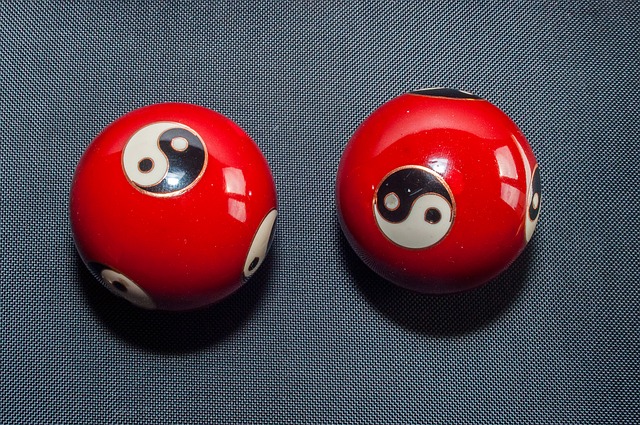
The basic structure of Gung Fu is based on the theory of Yin/Yang, a pair of mutually complementary forces that act continuously, without cessation, in this universe. This Chinese way of life can be applied to anything, but here we are interested in its relationship to the art of Gung Fu. the black part of the circle is called Yin. Yin can represent anything in the universe as: negativeness, passiveness, gentleness, insubstantiality, femalness, moon, darkness, night, etc. The other complementary part of the circle is Yang, which represent positiveness, activeness, firmness, substantiality, maleness, sun, brightness, day, etc.
The common mistake most people make is to identify this Yin/Yang symbol, T’ai-Chi, as dualistic; that is Yang being the opposite of Yin, and vice versa. As long as we separate this “oneness” into two, we won’t achieve realization. Actually, all things have their complementary part; it is only in the human mind and his perception that they are being separated into opposites. The sun is not the opposite of the moon, as they complement and are interdependent on each other, and we cannot survive without either of them. In a similar way, a male is but the complement of the female; for without the male, how on earth do we know there is female, or vice versa. The “oneness” of Yin/Yang is necessary in life. If a persona riding a bicycle wishes to go somewhere, he cannot pump on both the pedals at the same time or not pumping on them at all. In order to move forward, he has to pump one pedal and release the other. So the movement of going forward requires this “oneness” of pumping and releasing. Pumping then is the result of releasing, and vice versa; each being the cause of the other.

In the Yin/Yang symbol there is a white spot on the black part, and black spot on the white one. This is to illustrate the balance in life, for nothing can survive long by going to either extremes, be it negativeness or positiveness. Therefore, firmness must be concealed in gentleness, and gentleness firmness, and that is why a Gung Fu man must be pliable as spring. Notice that the stiffest tree is most easily cracked, while the bamboo or will bend with the wind. So in Gung Fu, or any other system, one must be gentle yet not giving away completely; be firm yet not hard, and even if he is strong, he should guard it with softness and tenderness. For if there is no softness in firmness, he is not strong; in a similar way, if one has firmness concealed in softness, no one can break through his defense. This principle of moderation provides a best means of preserving oneself, for since we accept this existence of the oneness (Yin/Yang) in everything, and do not teat it dualistically, we thus secure a state of tranquility by remaining detached and not inclining to either extreme. Even if we do incline on one extreme, be it negative or positive, we will flow with it in order to control it. This flowing with it without clinging is the true way to get rid of it.

When the movements in Yin/Yang flow into extremes, reaction sets in. For when Yang goes to the extreme, it changes to Yin; and when Yin (activated by Yang) goes to the extreme, it returns back to Yang (that is why each one is the result and cause of the other.) For example, when one works to the extreme, he becomes tired and has to rest (from Yang to Yin). This incessant changing of Yin/Yang is always continuous.

The application of the theory of Yin/Yang in Gung fu is known as the Law of Harmony, in which one should be in harmony with, and not against the force of the opponent. Suppose A applies strength on B, B shouldn’t oppose or gives way completely to it. For these are but the two extreme opposites of B’s reaction. Instead, he should complete A’s force, with a lesser force, and lead him to the direction of his own movement. As the butcher preserves his knife by cutting along the bone and not against it, a Gung Fun man preserves himself by following the movement of his opponent without opposition or even striving (Wu-Wai, spontaneous, or spirit action). This spontaneous assisting or A’s movement as he aims it will result in his own defeat.

When a Gung fu man finally understood the theory of Yin/Yang, he no longer “fusses” with so-called “gentleness” or “firmness”; he simply does what the movement requires him to do. In fact, all conventional forms and techniques are all gone, his movements are those of everyday movements. He doesn’t have to “justify” himself like so many other masters have, claiming his spirit or his internal power; to him, cultivation of martial art in the long run will return to simplicity, and only people of half-way cultivation justify and brag about themselves.

>